
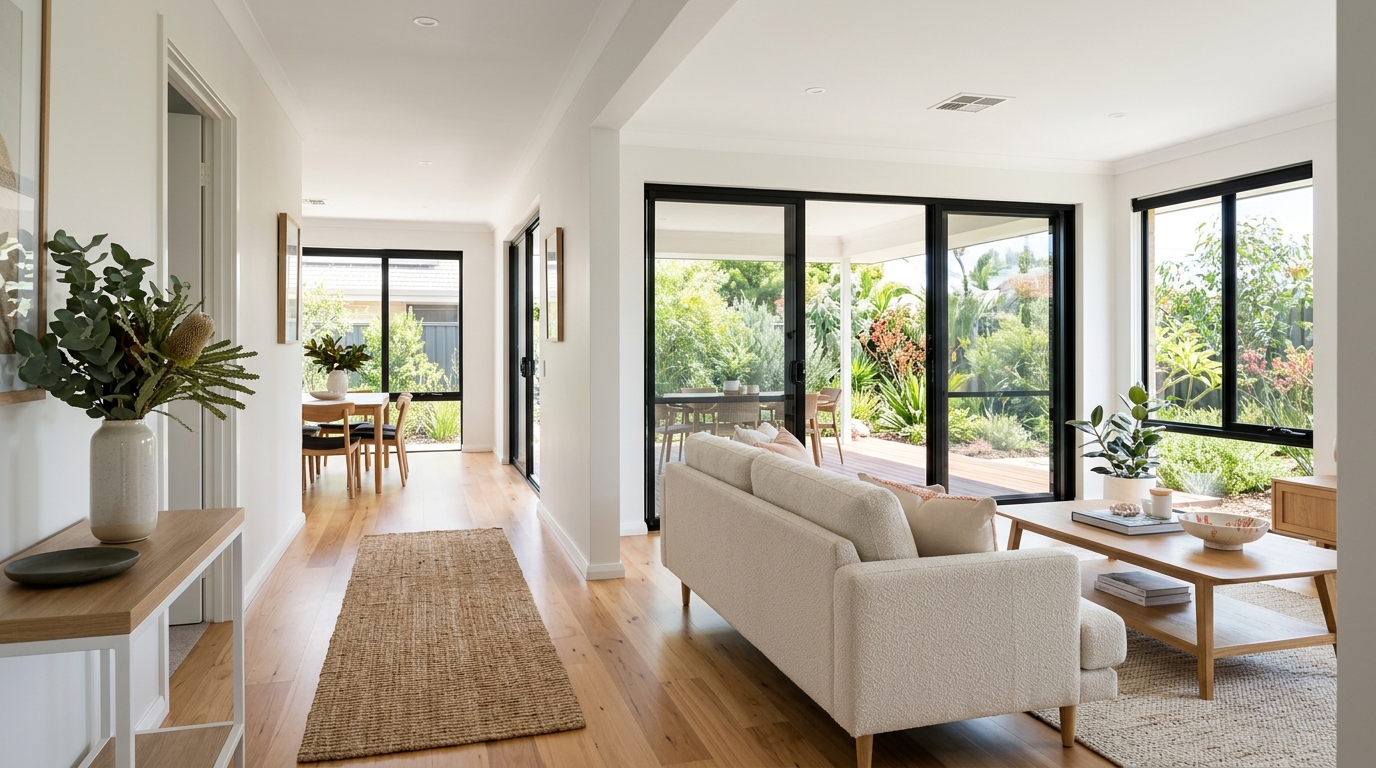
To prepare a home for sale in Perth, repair obvious defects, deep-clean every room, reduce clutter and make access easy. Improve light and presentation only where the work helps buyers understand the property’s space, condition and lifestyle. The campaign should look cared for without turning preparation into an open-ended renovation.
This room-by-room checklist helps sellers prioritise work that can be completed, photographed and maintained throughout a Perth sale campaign.
Where should home preparation begin?
Home preparation should begin with a written walk-through before any decorating or shopping. View the property from the street, move through it in the order a buyer will and photograph each space. Photos often reveal clutter, worn finishes and blocked sightlines that become familiar in daily life.
Sort every task into four groups:
- Repair: defects, loose fittings, damaged finishes and items that do not work.
- Clean: surfaces, glass, grout, appliances, outdoor areas and odours.
- Reduce: excess furniture, personal items, crowded storage and visual noise.
- Style: lighting, layout, linen, art and plants that clarify how the space works.
Ask for a property appraisal before committing to major work. The likely buyer, competing stock and expected price bracket should shape where the budget goes.
How should you prepare the front of the property?

The front should look cared for and easy to enter. Buyers form their first physical impression before they reach the door, and poor access can dominate the opening minutes of an inspection.
Check:
- street number is visible
- paths, steps and handrails are safe
- gates, locks and doorbells work
- weeds, leaves and cobwebs are removed
- lawns and garden edges are neat
- bins, hoses and loose tools are stored
- exterior lights operate
- the front door and hardware are clean
- vehicles do not block the façade or access
For an apartment, apply the same principle to the entry door, intercom, balcony and allocated parking or storeroom. Common-property issues should be raised with the strata manager rather than altered without approval.
How do you prepare living and dining areas for sale?
Living and dining areas should show circulation, scale and a clear use. Remove furniture that narrows walkways or makes the room feel smaller, even if that piece is useful in daily life.
Use this checklist:
- leave a clear route between doorways and outdoor areas
- centre furniture around the room’s strongest feature
- remove excess side tables, toys and electronics
- conceal cables and overloaded power boards
- clean windows, tracks, fans and light fittings
- replace failed globes with consistent colour temperature
- use a dining setting that suits the room’s true capacity
- open blinds or curtains without exposing damaged views
Keep styling restrained. A few well-scaled pieces read better than many small objects. The goal is not to erase character but to help buyers imagine their own furniture in the space.
What should you do in the kitchen before listing?

A sale-ready kitchen should feel clean, functional and easy to maintain. Buyers notice worktops, storage, appliance condition and signs of moisture.
Complete these tasks:
- degrease the rangehood, splashback and cabinetry
- clean the oven, cooktop and dishwasher edges
- repair loose handles, hinges and soft-close hardware
- clear most items from the benchtop
- remove magnets, paperwork and personal schedules
- organise visible pantry and open-shelf storage
- check taps, plugs and under-sink pipes for leaks
- empty bins and remove strong cooking odours
- polish sinks and stainless-steel surfaces
Do not hide a known defect behind styling. The WA Consumer Protection selling guidance says information provided to the agent should be factual and advertising must not be false or misleading.
How should bathrooms and laundries be prepared?
Bathrooms and laundries should look dry, ventilated and hygienic. Address the source of recurring moisture rather than painting over a symptom.
Focus on:
- grout, silicone and soap residue
- exhaust fans and ventilation
- dripping taps or running toilets
- water marks under cabinets
- mirrors, shower screens and chrome
- worn towels and bathmats
- crowded vanity and laundry products
- loose toilet seats, hooks and handles
- floor drains and visible waste areas
Use fresh, neutral linen for photography and inspections. Store daily products in an easy-to-reach box so the room can be reset quickly.
How do you prepare bedrooms and storage?
Bedrooms should communicate restful space and usable storage. A room overloaded with furniture can make both floor area and wardrobes difficult to judge.
Prepare each bedroom by:
- choosing a bed size that fits the room comfortably
- creating clear access to wardrobes and windows
- using simple, coordinated linen
- removing highly personal photographs and valuables
- reducing clothing and items in wardrobes
- repairing damaged blinds, doors and handles
- checking lights, fans and air-conditioning controls
- clearing items from under beds if visible
Buyers often open built-in storage with permission. Half-empty shelves give a clearer sense of capacity than tightly packed cupboards. Move excess belongings to secure off-site storage where possible rather than filling the garage.
What should be checked in home offices and flexible rooms?
Flexible rooms need one convincing primary purpose. A spare room that is simultaneously an office, gym, storeroom and guest room can appear smaller than it is.
Choose the use most relevant to the likely buyer and keep only the furniture needed to demonstrate it. Secure work documents, medications, keys and identity records before every inspection. Remove monitors or valuables if they cannot be safely stored.
If the room could be marketed as a bedroom, studio or study, make only claims supported by the property’s lawful configuration and records. Ask the agent how to describe it accurately.
How should outdoor areas be prepared for Perth buyers?

Outdoor areas should show shade, access, drainage and a manageable level of upkeep. Perth’s bright conditions can make dust, faded surfaces and neglected planting especially visible in photographs.
Check:
- patios, paving and balconies are swept and washed
- outdoor furniture suits the space
- gardens are trimmed without blocking windows
- reticulation leaks and broken fittings are addressed
- pool and spa areas are clean and secure
- side access is clear
- sheds and storerooms can be opened safely
- pet waste and strong odours are removed
- exterior lights and gates work
Do not make structural or strata-common-property changes without the right approval. For pools, electrical items, smoke alarms and other compliance matters, obtain current advice appropriate to the property before sale.
What should you repair before selling and what can wait?
Repair items that interrupt trust, access or normal operation. Cosmetic work should be judged by likely buyer response, total cost and campaign timing.
Use a simple decision test:
- Fix now: active leaks, unsafe access, failed locks, broken fixtures, visible damage and agreed compliance work.
- Price and disclose: larger issues where a rushed repair may not be economical or appropriate.
- Improve selectively: paint, flooring or landscaping where the current condition materially weakens presentation.
- Leave alone: personal taste changes without evidence they will improve the sale outcome.
Request itemised quotes and allow for delays. A half-finished improvement is usually worse than a clean, accurately presented property with a clear scope.
How do you keep the home inspection-ready?
Create a short reset routine for the campaign:
- open blinds and turn on necessary lights
- make beds and clear benches
- empty bins and sinks
- remove pet bowls, litter and waste
- set a comfortable temperature where practical
- secure valuables and documents
- park away from key sightlines
- leave the agent clear access
Plan where occupants and pets will go during inspections. A calm, uncluttered inspection helps buyers focus on the property rather than the household’s logistics.
The residential property sales service can coordinate presentation with photography, pricing and inspection strategy so each part supports the same buyer proposition.
Frequently asked questions about preparing a Perth home for sale
Should I renovate before selling my Perth home?
Only when the likely improvement in marketability justifies the cost, delay and risk. Start with cleaning, repairs and presentation, then assess larger work against local buyer expectations and comparable properties.
Is professional styling necessary?
No. Styling can help an empty, unusually proportioned or premium property, but many homes need only editing, furniture rearrangement and consistent presentation. Ask for options at different budgets.
Should the home be empty during inspections?
Occupants usually create a better inspection environment by leaving while buyers view the property. Secure valuables, arrange pets and let the agent manage questions and visitor movement.
Turn preparation into a focused campaign plan
The right checklist is specific to the property’s buyer, condition and competition. For clear priorities before spending, arrange a Perth property appraisal and map preparation to the intended campaign.
This article provides general information. Building, safety, strata and legal requirements vary by property. Obtain licensed advice for repairs, approvals and compliance work.