

Land tax in Western Australia is an annual tax on land that is not used as your principal place of residence, assessed on the total unimproved value of all land held by the same owners at midnight on 30 June. If you are liable, a Notice of Assessment arrives between September and January.
Two features of that definition catch owners out. It is based on unimproved value, which is the land only and excludes your house entirely, and it aggregates all land held by the same owners, so a second property can push a previously untaxed holding into liability. This guide explains how the assessment is built, what the exemptions cover, what to check when the notice arrives, and how land tax fits into an investment decision.
What is land tax in Western Australia?
Land tax is an annual state tax on land you own that is not your principal place of residence. RevenueWA describes it as an annual tax on land not used as your principal place of residence, assessed once a year, with a notice issued for land you owned at midnight on 30 June.
It is not the same as council rates, and it is not transfer duty. All three are separate charges with different bases:
| Land tax | Council rates | Transfer duty | |
|---|---|---|---|
| Charged by | RevenueWA (state) | Your local government | RevenueWA (state) |
| How often | Annually | Annually | Once, on purchase |
| Based on | Unimproved value of all land held by the same owners | A rateable value set by the local government | The dutiable value of the property being transferred |
| Applies to your own home | No, if it is your principal place of residence | Yes | Yes, when you buy it |
| Trigger date | Ownership at midnight on 30 June | Ownership during the rating year | Settlement of the purchase |
Transfer duty rates and calculators are published separately by the WA Government.
Who has to pay land tax in WA?
Anyone who owned land in Western Australia at midnight on 30 June that is not exempt, where the aggregated unimproved value of their holdings exceeds the tax-free threshold. RevenueWA publishes the current thresholds and rates, and they should be checked at the source rather than taken from any article.
Typical situations that create a liability:
- An investment property held while you live elsewhere.
- A holiday house or second home that is not your principal residence.
- Vacant land you are holding, including land bought for a future build.
- A former home you have moved out of and kept.
- Land held in a company or trust, which is assessed on its own ownership basis.
Because assessment is on all land held by the same owners, the ownership structure matters. Two properties owned by the same two people in the same proportions are aggregated. The same two properties owned in different combinations may be assessed differently. This is a question for your accountant before you buy, not after the notice arrives.
What is unimproved value, and why is it not what my property is worth?
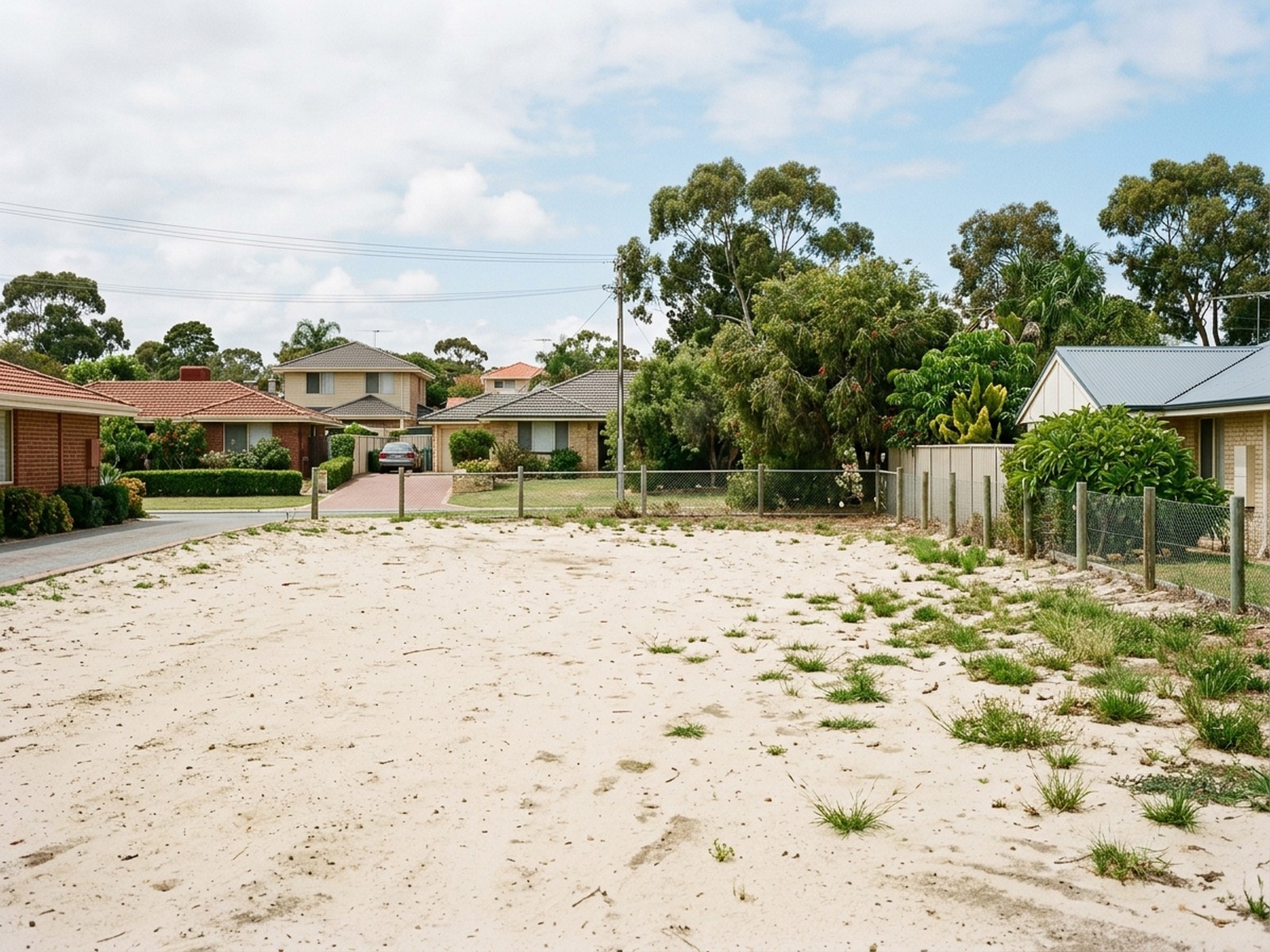
Unimproved value is the value of the land only, determined by the Valuer-General, and it deliberately excludes the house, the pool, the landscaping and everything else built on it.
Landgate explains that unimproved value is the value of the land only, and that for land within the metropolitan area and regional townsites it also includes merged improvements such as drainage, levelling and filling. The mechanics matter:
- All land in WA is assessed annually using a date of valuation of 1 August in the previous year.
- The UV is not an assessment at the current market. It reflects a retrospective vacant land sales market at the date of valuation.
- Valuers analyse vacant land sales evidence at that date, then adjust for individual property attributes: location, land area, lot configuration and topography, zoning and development potential, and views or proximity to busy roads.
- The UV is provided to RevenueWA for land tax, and to local governments for rates on some rural and rural-residential properties.
So a $960,000 Perth house does not carry a $960,000 unimproved value. The land component is a fraction of it, and the fraction varies enormously between a large riverside block and an apartment in a strata scheme. This is also why the UV on your notice will not resemble a market appraisal, and should never be used as one.
What land tax exemptions are available in WA?
The main exemption is for the home you live in, and there are several more covering the situations where owners move between properties or hold land they cannot occupy.
RevenueWA lists exemptions, concessions and rebates with separate application forms for each on its land tax exemptions page, including:
| Exemption | Broad eligibility |
|---|---|
| Living in your own home | You own and use the property as your primary residence on 30 June |
| Moving between homes | You are moving from one home to another acquired in the previous financial year |
| Building a new home | You are building, and do not live at another property you own during construction |
| Moving to a new or renovated home | You are building on newly acquired land and plan to sell your old home |
| Deceased estate | A private residence after the owner’s death |
| Owner in care | You move into full-time care such as a nursing home or hospital |
Partial exemptions and concessions also exist where only some owners use the land as their primary residence, or where land is used for both exempt and non-exempt purposes, such as a property that is part residential and part commercial. Further categories cover retirement villages, aged care, build-to-rent, primary production, subdivided residential land, charitable and religious use, and an inner city living rebate.
Exemptions are not automatic. Each has its own application form, and RevenueWA notes that changes to the construction exemption have been announced, so check the current position on their page before relying on any exemption. If your circumstances changed during the year, do not assume the assessment already reflects it.
When does the assessment arrive, and what should you check?
If you are liable, the Notice of Assessment arrives between September and January, covering land you owned at midnight on 30 June. Read it when it arrives rather than paying it unexamined.
Check each of these:
- The properties listed. Every parcel, and nothing that you sold before 30 June.
- The ownership shown, including the proportions and any company or trust.
- Whether an exemption you are entitled to has been applied. If you moved into or out of a property during the year, this is where an error appears.
- The unimproved values used, against the values shown on your rates notices.
- The aggregation. Confirm the notice is combining the right holdings and not including land held in a different ownership structure.
If the unimproved value itself looks wrong, that is a Landgate matter rather than a RevenueWA one. Landgate provides a process for lodging an objection to a valuation, and there are time limits, so act promptly. Queries about the tax calculation itself go to RevenueWA.
How should land tax affect an investment decision?
Treat it as a recurring holding cost from the day you buy, not as a surprise that arrives in the first spring after settlement. It reduces net return every year you hold the property.
Practical implications:
- Build it into the net yield. An investment assessed on gross rent alone overstates its return, and land tax is one of the costs that disappears in that version of the sums.
- Understand the land content. A house on a large block carries more unimproved value than an apartment of similar price, so two properties at the same purchase price can attract very different land tax.
- Check the aggregate effect before buying a second property, because the assessment combines holdings and the threshold applies to the total.
- Confirm the settlement-date adjustment. Land tax liability attaches to ownership at midnight on 30 June, and how it is handled between buyer and seller is a contract matter to raise with your settlement agent.
- Review annually. Values are reassessed each year, and your own circumstances may create or remove an entitlement.
If you own a tenanted property and land tax is part of what is prompting a review, our guide to selling a tenanted property in WA covers what a sale involves with a tenant in place.
Frequently asked questions
Do I pay land tax on my own home in WA?
No, not where the property is your principal place of residence and you own and use it as your primary residence on 30 June. The exemption has its own application form, so confirm it has actually been applied to your assessment.
When is WA land tax assessed?
Land tax is assessed once a year, based on land you owned at midnight on 30 June. If you are liable, RevenueWA issues a Notice of Assessment between September and January.
What is the difference between unimproved value and market value?
Unimproved value is the value of the land alone, set by the Valuer-General using a date of valuation of 1 August in the previous year, and for metropolitan land it includes merged improvements such as drainage and levelling. Market value includes the buildings and reflects today’s market. They are not comparable figures.
Does land tax apply to apartments?
It can, where the apartment is not your principal place of residence. The unimproved value attributable to a strata lot is generally lower than for a house on its own block, which is one reason land tax often bites less on apartments than on houses at a similar price.
What happens if I sell the property during the year?
Liability follows ownership at midnight on 30 June, so selling after that date does not remove the assessment for that year. How land tax is adjusted between the parties is a contract matter, and your settlement agent should confirm the treatment.
Can I dispute the valuation used for land tax?
Yes. The unimproved value is determined by the Valuer-General at Landgate, which has an objection process with time limits. Queries about how the tax itself has been calculated go to RevenueWA instead.
Know the holding costs before you buy the next one
Land tax is one of the costs that separates a property’s advertised return from its actual one, and it is entirely knowable before you purchase. So are strata levies, rates and insurance. The owners who are surprised are the ones who worked from gross figures.
If you are weighing up an addition to a portfolio, or reviewing whether an existing holding still earns its place, see our apartments and investment overview or request a confidential appraisal of what you currently hold.
Call Brian on 0418 896 354 or email brianmcallister@theagency.com.au. Seven days, by appointment.
This article is general information for Western Australia and is not taxation, legal or financial advice. Land tax thresholds, rates and exemptions change, and the position published by RevenueWA and Landgate prevails. Obtain advice from your accountant or tax adviser, and confirm current rates at wa.gov.au, before acting.